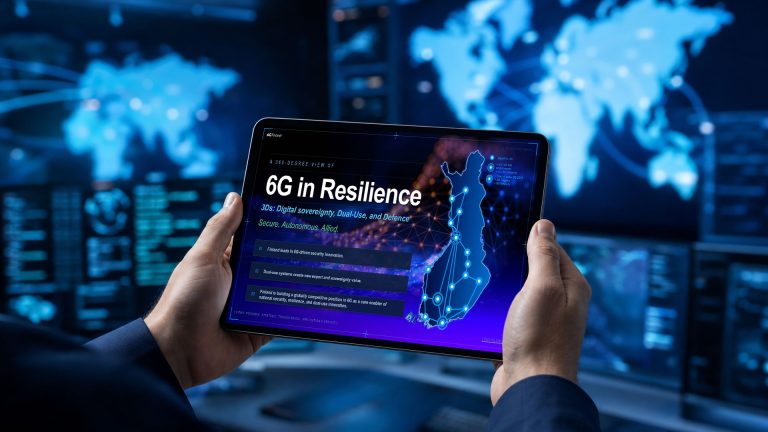

Finland is taking the next step in 6G research with the launch of Connected Intelligence and Networks for a Resilient Society (CINET), a new Finnish science flagship led by the University of Oulu in partnership with Aalto University, the University of Helsinki and VTT Technical Research Centre of Finland.
Building on the achievements of 6G Flagship, CINET will advance research into future communication networks, distributed computing and connected intelligence. The flagship focuses on developing intelligent, secure and resilient networks capable of supporting society’s increasingly interconnected digital infrastructure.
CINET brings together more than 50 principal investigators and a broad network of researchers and collaborators. Its research covers areas including AI-native networks, integrated sensing and communications, cybersecurity, non-terrestrial networks and emerging technologies that will shape future 6G systems.
Strengthening Finland’s 6G ecosystem
CINET marks an important continuation of Finland’s long-term investment in 6G research and innovation. Beyond scientific advances, the flagship aims to strengthen collaboration between research organisations, industry and public-sector stakeholders, supporting the development of new technologies, applications and business opportunities.
The national 6G Finland network will continue to play an important role in connecting Finnish 6G expertise and strengthening international cooperation.
Jaakko Sauvola, CINET Impact Director and Co-Chair of 6G Finland, highlights the growing importance of the research, development and innovation ecosystem established through Finland’s 6G activities. Together with the national 6G Finland network, this ecosystem will help translate research results into innovations and future business opportunities.
By bringing together scientific excellence, industry collaboration and international partnerships, CINET will further strengthen Finland’s position in global 6G development and help shape the intelligent and resilient networks of the 2030s.